Identifying wording changes means comparing one edition of a policy form against the one it replaced and finding exactly what moved: a redefined term, a new exclusion, a narrowed condition. The changes that matter most are often small in word count and large in effect, which is what makes a careless comparison risky.
This is how to compare editions properly: what to line up against what, and how to tell a cosmetic edit from a real coverage shift.
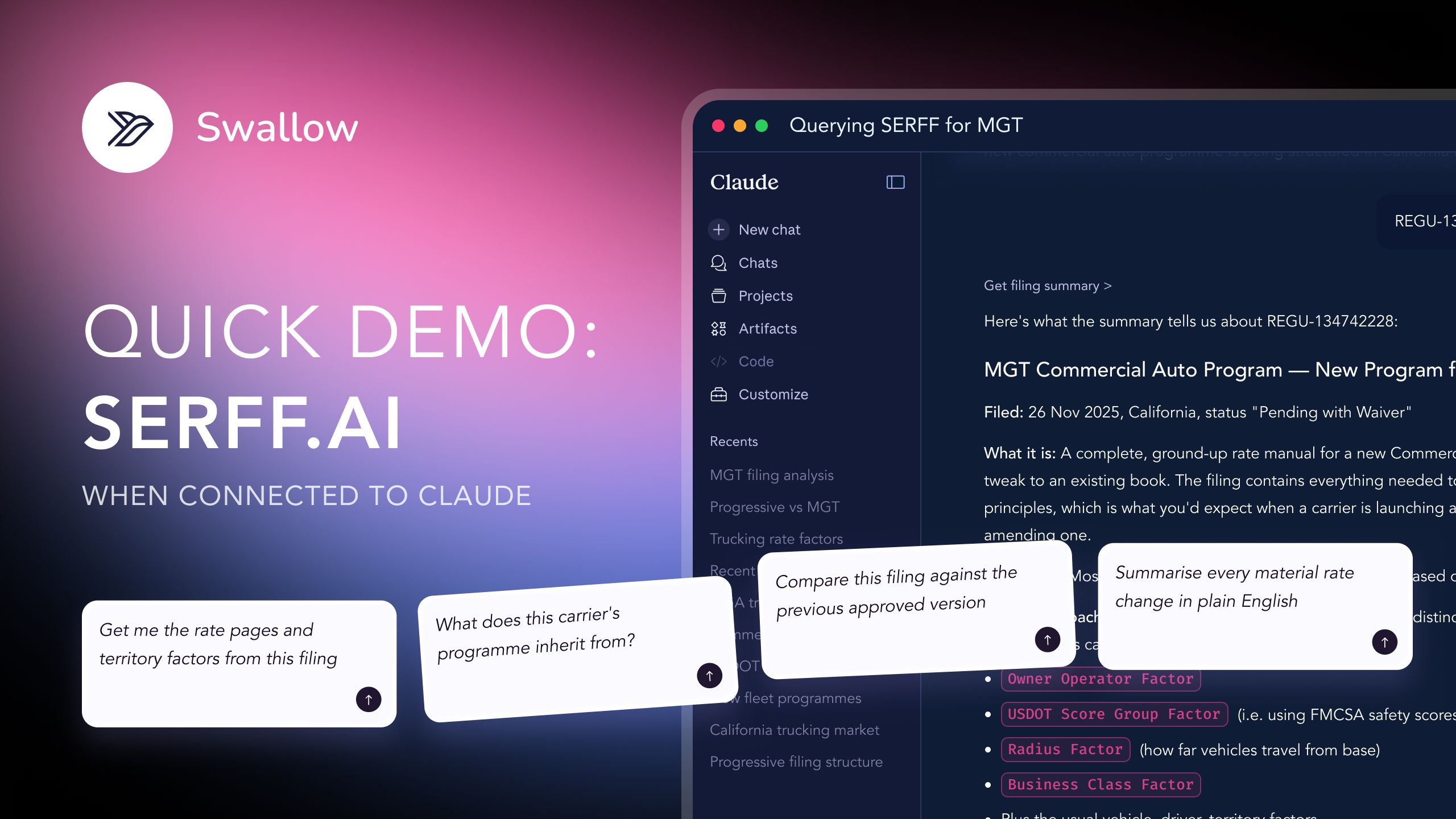
serff.ai is built to do that for you: it indexes millions of SERFF filings and lets you ask questions in plain English instead of opening documents one by one. You can connect it to the AI assistant you already use: Claude or ChatGPT, via the serff.ai MCP server, or work directly in the web platform.
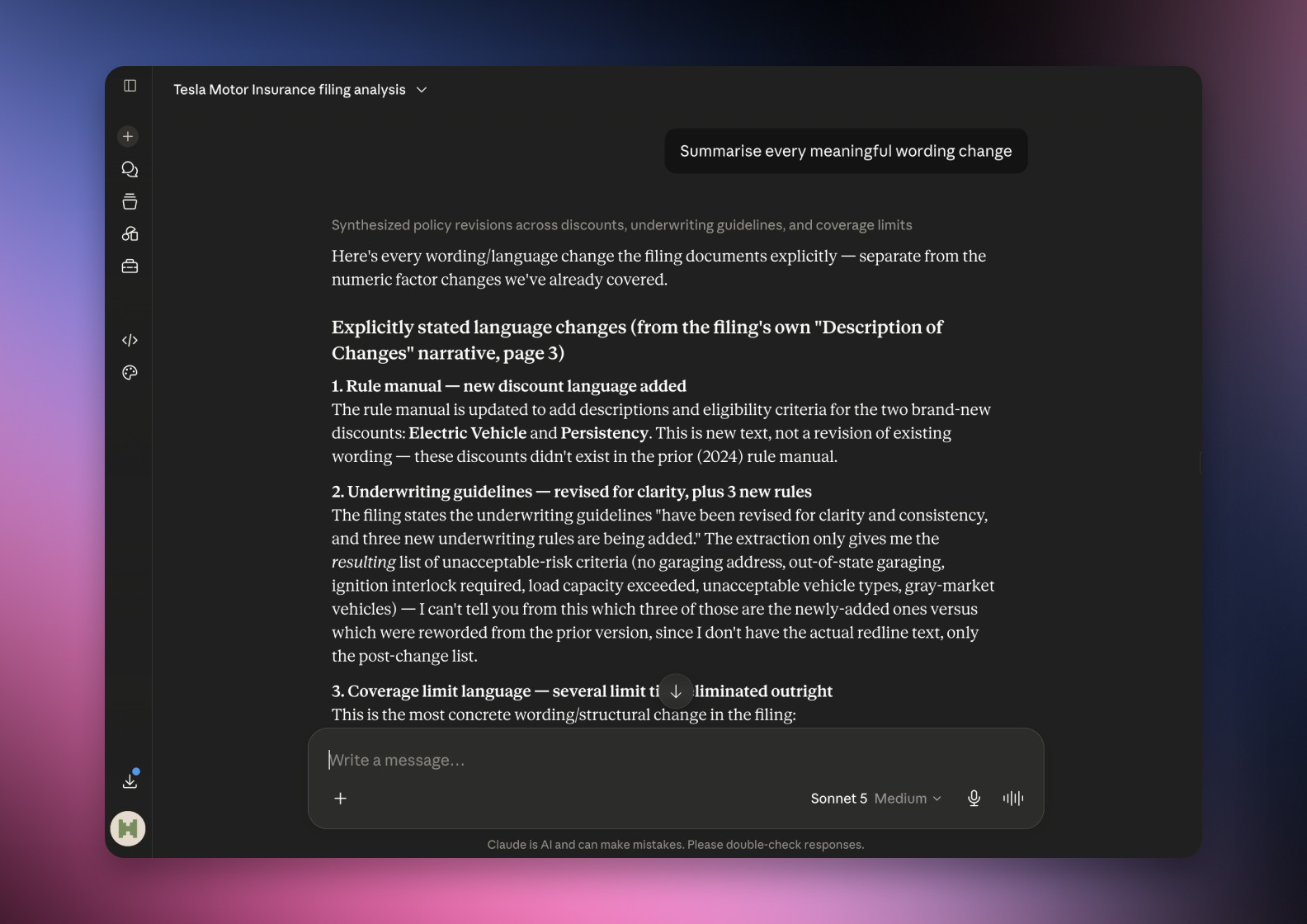

Connected via MCP to the AI you already use, Claude or ChatGPT, or through our dedicated platform, serff.ai makes searching and analysing SERFF filings effortless. A wording comparison becomes a single question: ask what changed between two editions, or whether a change affects coverage, and get a grounded, cited answer in seconds.
The manual way
Read two form editions side by side, line by line.
With serff.ai, just ask
“What changed between these two editions of this form?”
The manual way
Work out whether an edit is cosmetic or substantive.
With serff.ai, just ask
“Does this wording change actually affect coverage?”
The manual way
Check whether a definition change ripples elsewhere.
With serff.ai, just ask
“Show me every place this definition is used.”
The manual way
Compare wording changes across several states at once.
With serff.ai, just ask
“Summarise every meaningful wording change.”
Every answer is cited back to the exact page of the source PDF and grounded only in filed values, with no invented numbers, so you can trust it the way this audience needs to. Research that took weeks takes a prompt.
No credit card required. Simply sign up and connect to Claude or ChatGPT or use Swallow’s SERFF.ai platform.
Match editions of the same form number, confirmed by edition date, and compare them section by section: insuring agreement against insuring agreement, definitions against definitions, exclusions against exclusions. Comparing mismatched sections is the most common way a real change gets missed.
Not every edit changes coverage. Reformatting, renumbering and plain-language rewrites can leave the substance untouched. A substantive change alters what is covered, who is covered, or under what condition a claim is paid, and it is worth reading each edit with that specific question in mind.
Pay particular attention to definitions. Because a defined term can appear dozens of times throughout a form, a single definition change can ripple through the entire document without a corresponding change to any other visible section.
A multi-state insurer may roll the same wording change out to several states at once, or stagger it over time. Comparing the same form's editions across a handful of states shows you whether a change is part of a coordinated rollout or a state-specific adjustment, which matters for understanding the product as a whole.
Do not assume a change identified in one state's filing has, or hasn't, happened in another. Confirm each state's edition directly rather than extrapolating from one filing.
Identifying wording changes means comparing matched sections across confirmed editions, definitions against definitions and exclusions against exclusions, and asking of every edit whether it actually changes coverage. Definitions deserve extra attention, since a single change there can ripple through the whole form.
Match sections directly: insuring agreement against insuring agreement, definitions against definitions, and so on, using edition date to confirm you have the right versions.
Ask whether the edit changes what is covered, who is covered, or the conditions for a claim; reformatting and plain-language rewrites without those effects are cosmetic.
A defined term can appear throughout a form, so a single definition change can alter the meaning of language elsewhere in the document without any other visible edit.
Not necessarily. Multi-state insurers can roll changes out on different timelines by state, so confirm each state's filing directly.
Exclusions are the most direct way coverage narrows, though a redefined term in the definitions section can have a similar effect indirectly.





 ChatGPT
 Claude
.png)
.png)
.png)