
The effective date in an insurance filing is the date an approved change actually takes hold: the point at which a new rate, rule or form applies to real policies. It is easy to conflate with the date a filing was submitted or approved, but those are three different moments, and only one of them tells you when the change is actually live.
Getting this distinction right matters for anyone tracking what is currently in the market, since a filing can be fully approved and still not yet affect a single policyholder.
serff.ai is built to do that for you: it indexes millions of SERFF filings and lets you ask questions in plain English instead of opening documents one by one. You can connect it to the AI assistant you already use: Claude or ChatGPT, via the serff.ai MCP server, or work directly in the web platform.
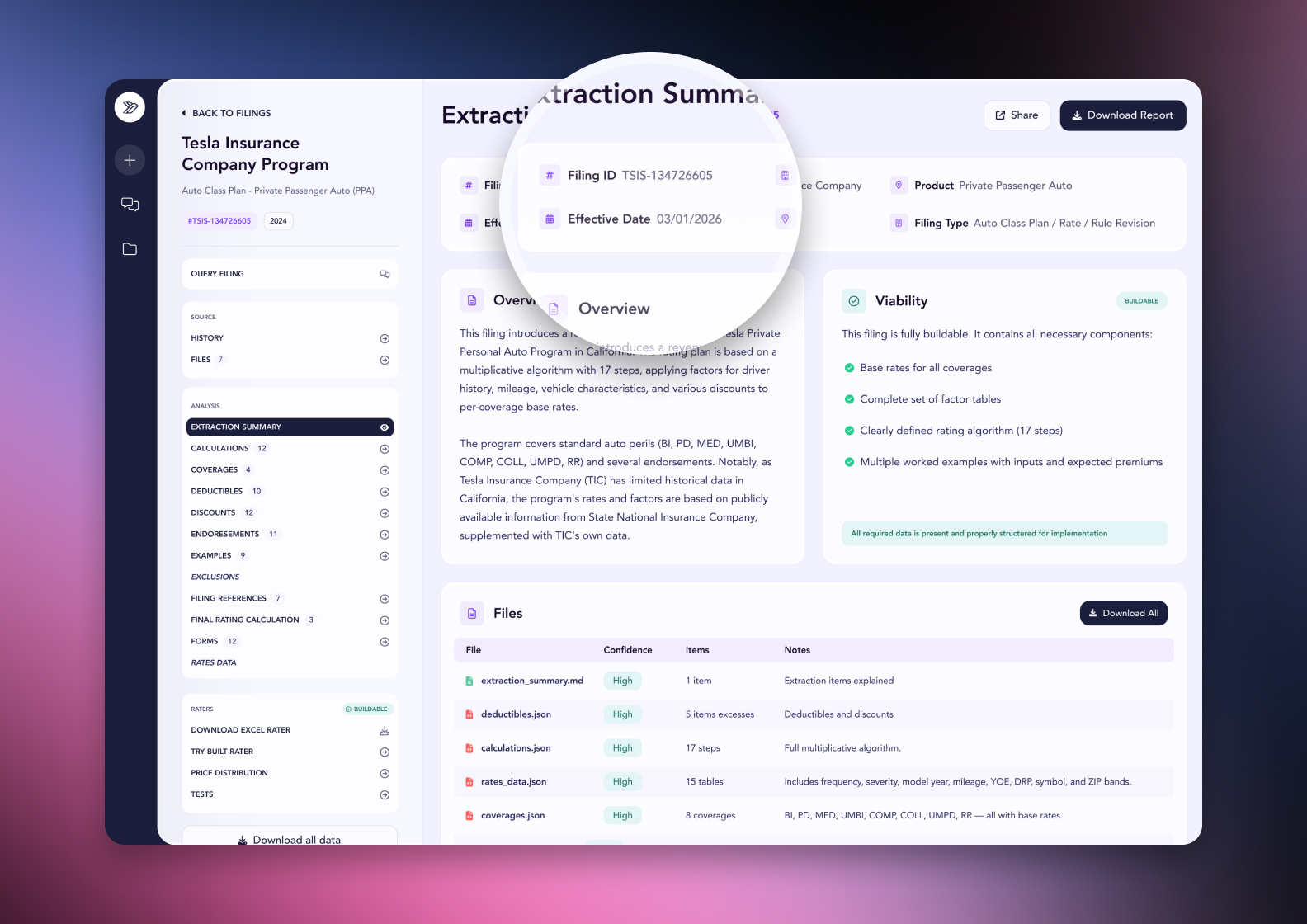

Connected via MCP to the AI you already use, Claude or ChatGPT, or through our dedicated platform, serff.ai makes searching and analysing SERFF filings effortless. An effective date becomes a single question: ask when a change actually applies, or whether it is live yet, and get a grounded, cited answer in seconds.
The manual way
Dig through a filing to separate submitted from effective dates.
With serff.ai, just ask
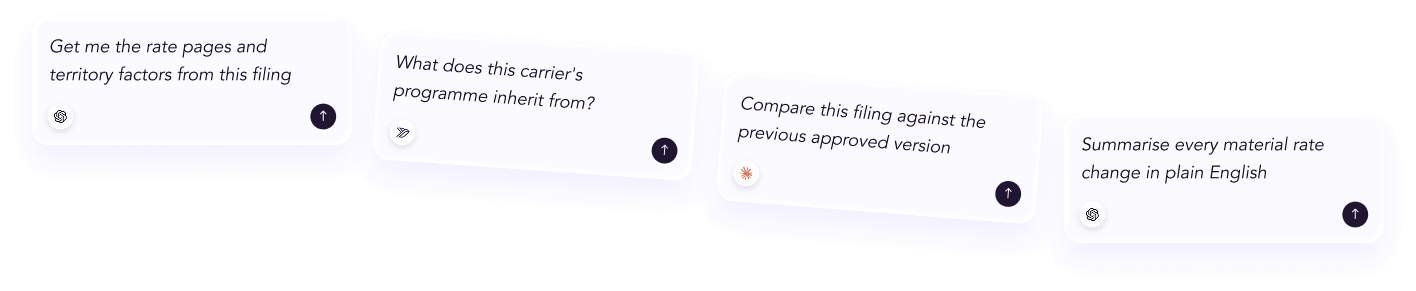
“What is the effective date of this filing?”
The manual way
Work out whether an approved change is already live.
With serff.ai, just ask
“Is this approved change already in effect?”
The manual way
Check the effective date for new business versus renewals.
With serff.ai, just ask
“Does the effective date differ for new and renewal business?”
The manual way
Track multiple filings to see what changes are coming.
With serff.ai, just ask
“Which filings have an effective date in the next quarter?”
Every answer is cited back to the exact page of the source PDF and grounded only in filed values, with no invented numbers, so you can trust it the way this audience needs to. Research that took weeks takes a prompt.
No credit card required. Simply sign up and connect to Claude or ChatGPT or use Swallow’s SERFF.ai platform.
A filing carries several dates, and each answers a different question.
The gap between approval and effective date can be days or months, depending on the insurer's implementation timeline and any state-specific waiting period.
If you are tracking what is currently happening in a market, the effective date is the number that matters, not the approved date. A rate change can be approved and still have no impact on a single policyholder yet, and reading the disposition alone can miss that gap.
Do not assume approved means live. Check the effective date specifically, since an approved change with a future effective date has not yet reached the market.
Effective dates often apply differently depending on when a policy is issued. A change can take effect for new business immediately while existing policyholders only see it at their next renewal, which staggers the real-world impact of a single filing over many months.
When comparing a rate change's stated impact against what you observe in the market, check whether you are looking at new business or renewal business. The same filing can look very different depending on which population you're tracking.
It typically appears in the Filing at a Glance summary and is confirmed in the disposition. If the filing was amended, check that the effective date you are reading reflects the current version, not an earlier one.
The effective date is when an approved change actually applies, distinct from when it was submitted or approved. Always check it directly, and separately for new versus renewal business, before assuming a filing has already reached the market.
It is the date an approved rate, rule or form change actually begins to apply to policies, distinct from the submitted and approved dates.
No. A filing can be fully approved with a future effective date, meaning the change has not yet reached the market.
Insurers often apply a change to new business immediately while existing policyholders only see it at their next renewal, staggering the real-world impact.
It typically appears in the Filing at a Glance summary and is confirmed in the disposition once review is complete.
Yes. If a filing is amended, the effective date can shift, so it is worth confirming you are reading the current version.





 ChatGPT
 Claude
.png)
.png)
.png)
.png)