
A product timeline lays out every meaningful filing event in order: the original launch, each rate change, each rule and form update, across however many years the product has existed. Where tracking a single filing follows one submission through its life, a timeline is a wider view, stitching many filings together into the story of a product over time.
This is how to build one that is genuinely useful: what to include, how to keep it accurate as new filings emerge, and how to read the finished timeline for the trends it reveals.
serff.ai is built to do that for you: it indexes millions of SERFF filings and lets you ask questions in plain English instead of opening documents one by one. You can connect it to the AI assistant you already use: Claude or ChatGPT, via the serff.ai MCP server, or work directly in the web platform.
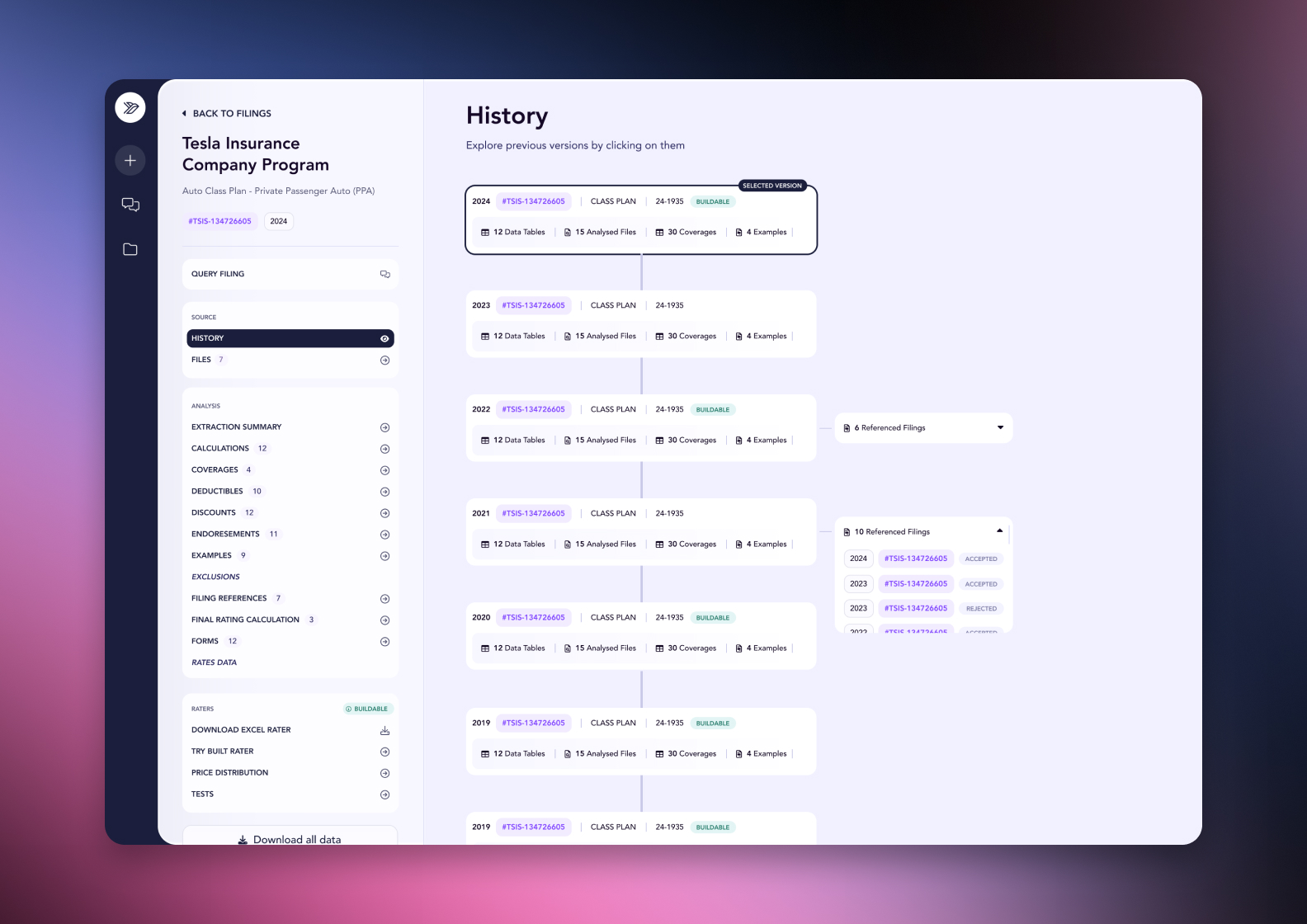

Connected via MCP to the AI you already use, Claude or ChatGPT, or through our dedicated platform, serff.ai makes searching and analysing SERFF filings effortless. A timeline becomes a single question: ask for a product's full filing history in order, or what changed at a specific point in time, and get a grounded, cited answer in seconds.
The manual way
Compile every filing event for a product across years by hand.
With serff.ai, just ask
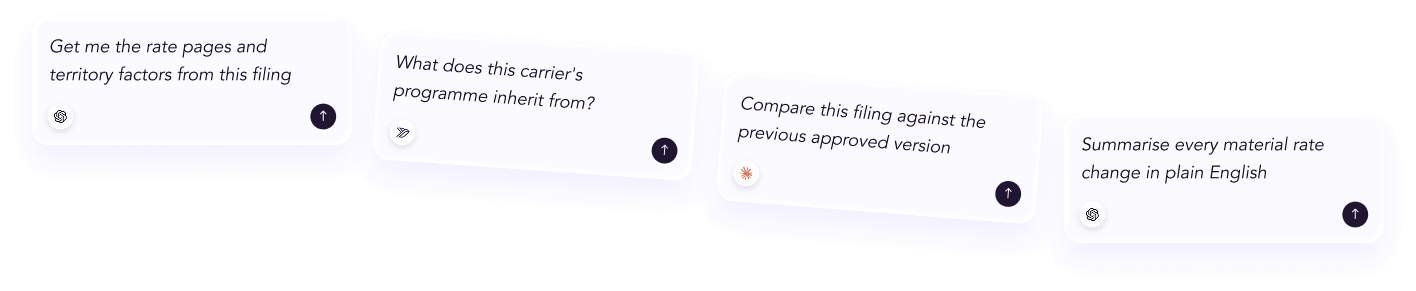
“Build a timeline of this product's filing history.”
The manual way
Work out how frequently a product has seen rate changes.
With serff.ai, just ask
“How often has this product had a rate change over its history?”
The manual way
Spot a pattern in when changes tend to happen.
With serff.ai, just ask
“Is there a pattern in when this product's rate changes occur?”
The manual way
Connect a specific market event to a filing response.
With serff.ai, just ask
“What filing activity followed this market event?”
Every answer is cited back to the exact page of the source PDF and grounded only in filed values, with no invented numbers, so you can trust it the way this audience needs to. Research that took weeks takes a prompt.
No credit card required. Simply sign up and connect to Claude or ChatGPT or use Swallow’s SERFF.ai platform.
Include every filing that materially changed the product: the original launch, each rate change, rule update and form revision, marked with its effective date rather than just its filing date, since that's when the change actually reached the market.
Work from the most recent filing backward, using tracking numbers to connect each filing to its predecessor, the same approach used for historical research generally, applied specifically to one product rather than a broader search.
Use effective date, not filing date or approval date, to place events on the timeline. Filing and approval dates tell you about the review process; effective date tells you what was actually true in the market at any given point.
A timeline is only accurate as of when you last updated it. If you're maintaining one for ongoing use, track the product's filings for new activity rather than rebuilding the whole thing from scratch each time you need it.
Once built, a timeline reveals patterns a single filing never could: how frequently the product is repriced, whether changes cluster around specific seasons or market conditions, and how the pace of change has shifted over the product's life. That pattern is often more informative than any individual data point.
A gap in the timeline doesn't always mean nothing happened. It can mean a filing exists but hasn't been located yet, particularly for older history where records are less complete. Treat gaps as open questions, not confirmed inactivity.
A product timeline stitches every meaningful filing, ordered by effective date, into the story of a product over time. Build it backward from the most recent filing using tracking numbers, keep it current with ongoing tracking, and read the finished pattern for what any single filing can't show.
Every filing that materially changed the product: the launch, each rate change, and each rule or form update, ordered by effective date.
Effective date, since it reflects when a change actually applied in the market, unlike filing or approval dates which describe the review process.
Work backward from the most recent filing using tracking numbers to connect each filing to its predecessor, the same approach used for general historical research.
Track the product's filings on an ongoing basis for new activity rather than rebuilding the entire timeline from scratch each time.
Patterns like how frequently a product is repriced, whether changes cluster around certain periods, and how the pace of change has shifted over its life.





 ChatGPT
 Claude
.png)
.png)
.png)
.png)