
Monitoring is different from research. Research answers a specific question at a point in time; monitoring is the ongoing practice of watching a product category or a set of competitors for new activity, so you find out about a change soon after it happens rather than the next time you happen to look.
This is how to set up monitoring that actually works: what to watch, how often, and how to turn filing activity into something closer to an alert than a chore.
serff.ai is built to do that for you: it indexes millions of SERFF filings and lets you ask questions in plain English instead of opening documents one by one. You can connect it to the AI assistant you already use: Claude or ChatGPT, via the serff.ai MCP server, or work directly in the web platform.
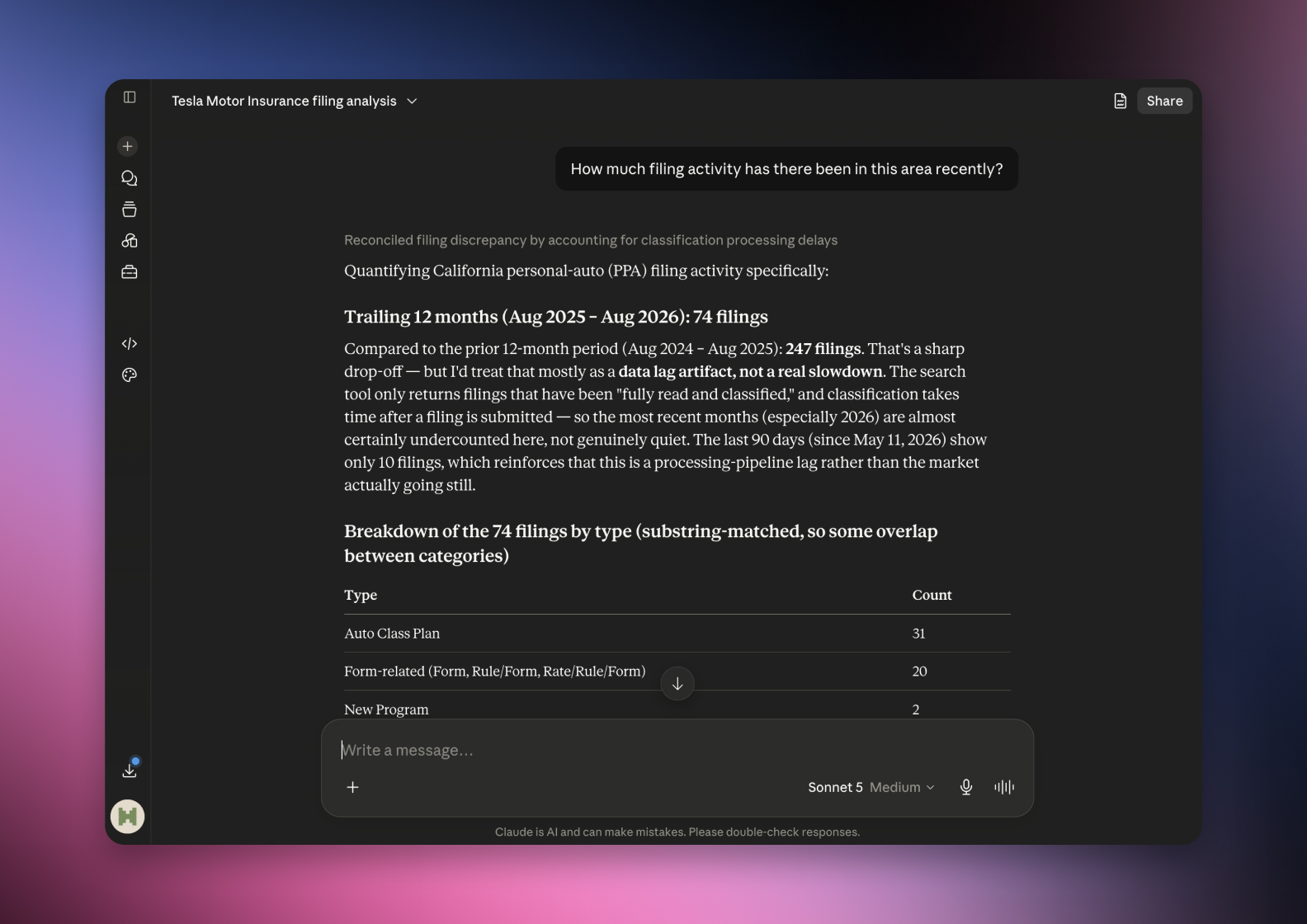

Connected via MCP to the AI you already use, Claude or ChatGPT, or through our dedicated platform, serff.ai makes searching and analysing SERFF filings effortless. Monitoring becomes a single question: ask what's changed since you last checked, and get a grounded, cited answer in seconds, every time you ask.
The manual way
Manually re-check a product category every so often.
With serff.ai, just ask
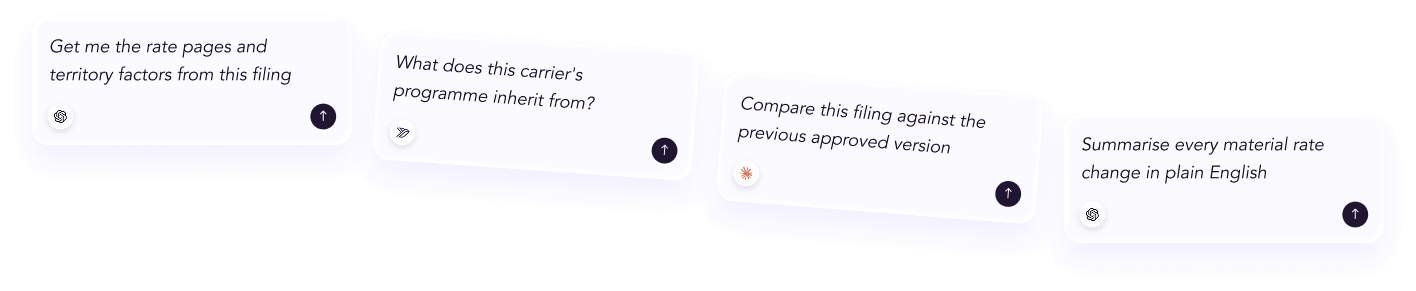
“What has changed in this product category since last month?”
The manual way
Search each competitor separately for new activity.
With serff.ai, just ask
“Has anything new appeared from these companies recently?”
The manual way
Decide by feel how often to check for updates.
With serff.ai, just ask
“How much filing activity has there been in this area recently?”
The manual way
Read every new filing in full to see if it matters.
With serff.ai, just ask
“Which of these new filings are actually significant?”
Every answer is cited back to the exact page of the source PDF and grounded only in filed values, with no invented numbers, so you can trust it the way this audience needs to. Research that took weeks takes a prompt.
No credit card required. Simply sign up and connect to Claude or ChatGPT or use Swallow’s SERFF.ai platform.
Match the check frequency to how fast the category actually moves. A stable, mature product line might only need a monthly check; a competitive, fast-changing segment can warrant weekly attention. Checking too rarely defeats the purpose of monitoring versus one-off research.
The practical difference between monitoring and repeated one-off research is consistency: the same companies and product types checked on the same schedule, so nothing depends on remembering to look. Treat it as a recurring task, not something you do when you happen to think of it.
Keep a simple running log of what you found each time you check, even briefly. It turns individual snapshots into a timeline, and makes it much easier to spot when something has genuinely changed versus normal background activity.
Not every new filing needs a deep read. Use status and filing type to triage quickly, a rate filing from a key competitor deserves more attention than a routine administrative update, and save the full analysis for the filings that actually matter.
Monitoring that isn't reviewed regularly is just data collection. The value comes from actually looking at what's accumulated on a consistent schedule, not from having the data available somewhere.
Monitoring means checking the same companies and product categories on a consistent schedule matched to how fast that segment moves, not a one-time research pass. Triage new filings quickly by type and source, save deep analysis for what actually matters, and review what you've gathered regularly.
Research answers a specific question at a point in time; monitoring is the ongoing practice of watching for new activity so changes are caught soon after they happen.
New filings, rate movement from key competitors, new market entrants, and form or coverage updates in the category you're tracking.
Match the frequency to how fast the category moves; a stable product line might need only monthly checks, while a competitive segment can warrant weekly attention.
Use a consistent schedule and the same set of companies or product types each time, rather than checking only when you happen to think of it.
No. Triage by filing type and source first, and reserve deep analysis for the filings that are actually significant.





 ChatGPT
 Claude
.png)
.png)
.png)
.png)