
Filing status is where a submission currently stands in the review process, at whatever moment you happen to be looking. It answers a narrower question than disposition: not how the filing ended, but where it is right now, whether that is still under review, awaiting a response, or already closed.
Status values are simple on their face, but reading them correctly means understanding what each one does and does not tell you, and knowing that status changes over time even when nothing about the filing's substance has moved.
serff.ai is built to do that for you: it indexes millions of SERFF filings and lets you ask questions in plain English instead of opening documents one by one. You can connect it to the AI assistant you already use: Claude or ChatGPT, via the serff.ai MCP server, or work directly in the web platform.
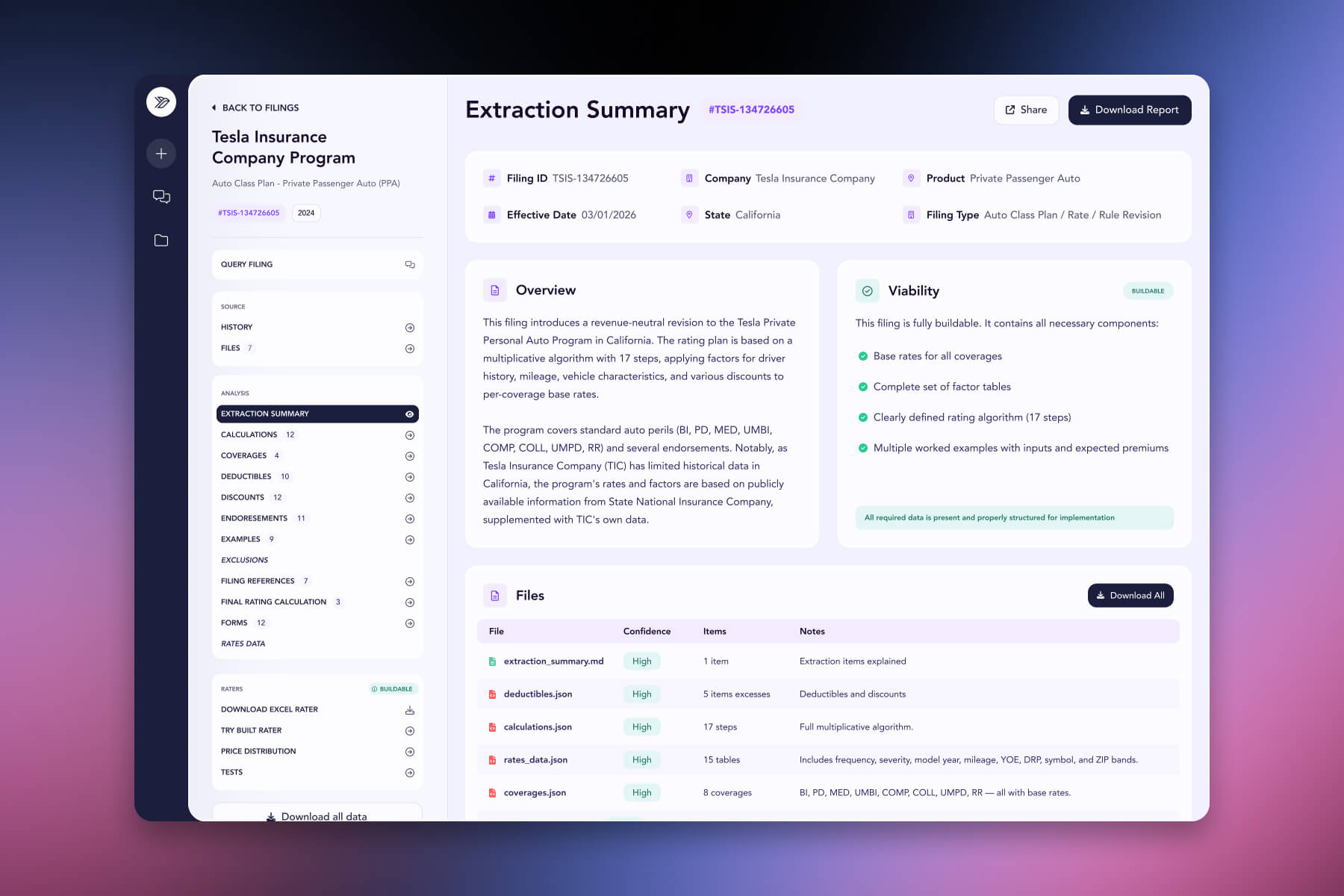

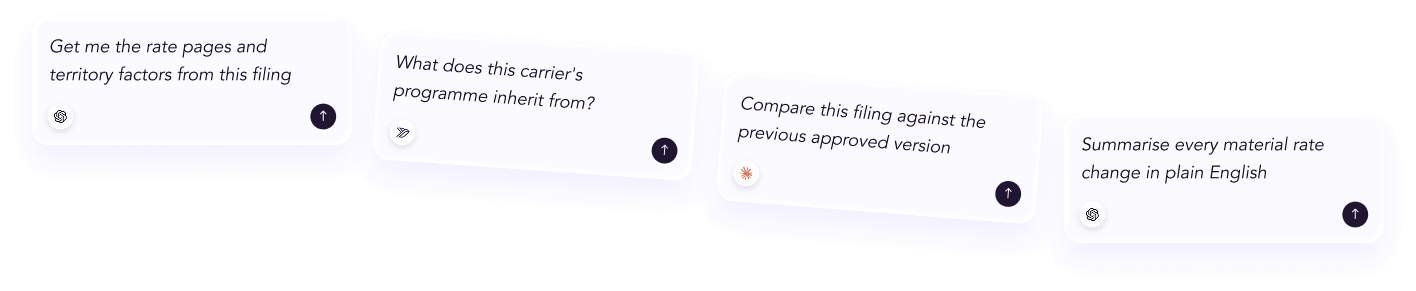
Connected via MCP to the AI you already use, Claude or ChatGPT, or through our dedicated platform, serff.ai makes searching and analysing SERFF filings effortless. Filing status becomes a single question: ask where a filing currently stands, what changed it, or how long it has been in that state, and get a grounded, cited answer in seconds.
The manual way
Check a filing's status manually, one filing at a time.
With serff.ai, just ask
“What is the current status of this filing?”
The manual way
Work out how long a filing has sat in one status.
With serff.ai, just ask
“How long has this filing been in review?”
The manual way
Monitor many filings for status changes by hand.
With serff.ai, just ask
“Which of these filings have changed status recently?”
The manual way
Figure out why a status changed without reading everything.
With serff.ai, just ask
“What caused this filing's status to change?”
Every answer is cited back to the exact page of the source PDF and grounded only in filed values, with no invented numbers, so you can trust it the way this audience needs to. Research that took weeks takes a prompt.
No credit card required. Simply sign up and connect to Claude or ChatGPT or use Swallow’s SERFF.ai platform.
Exact labels vary by state, but most filings move through a recognisable set of statuses.
Status is a snapshot: where the filing stands right now. Disposition is the final outcome once review has finished. A filing can carry several statuses over its life, in review, then objection-pending, then filed, but it only has one disposition, recorded at the end.
Status typically changes at defined points: assignment to a reviewer, the issuing of an objection letter, receipt of the insurer's response, an amendment, or the final decision. Tracking those transitions is effectively tracking the review itself.
If you are monitoring a filing you expect to move soon, status is the field to watch first. It updates faster than the underlying documents and tells you when to go back and read the correspondence for what actually happened.
A status of 'filed' does not always mean formally approved; in file-and-use states it can simply mean the filing was accepted for use without a full review sign-off. Check the state's regime before assuming what a status implies.
Filing status is a snapshot of where a submission stands right now, distinct from disposition, which is the final outcome. Watching status changes is the fastest way to know when a filing has moved, and it tells you exactly when to check the correspondence for why.
It is the filing's current position in the review process at a given point in time, such as in review, filed, approved or withdrawn.
Status is a snapshot of where the filing currently stands; disposition is the final outcome recorded once review is complete.
Not necessarily. In file-and-use states, 'filed' can mean the filing was accepted for use without a formal approval review.
Status updates at defined points in review, such as assignment, an objection, a response, or an amendment, so it can change several times before disposition.
By monitoring the filing directly through SERFF Filing Access or a tool that tracks status changes and alerts you when they occur.





 ChatGPT
 Claude
.png)
.png)
.png)
.png)