
Researching a product across multiple states means following one underlying offering as it appears in each state's own filings, and understanding how, and how much, it varies from one to the next. The same product name can carry different rates, different rules and even different form wording depending on the state, so a multi-state view means building the picture state by state and then looking at it as a whole.
This is how to structure that research so the state-level differences become visible instead of getting lost in the volume of individual filings.
serff.ai is built to do that for you: it indexes millions of SERFF filings and lets you ask questions in plain English instead of opening documents one by one. You can connect it to the AI assistant you already use: Claude or ChatGPT, via the serff.ai MCP server, or work directly in the web platform.
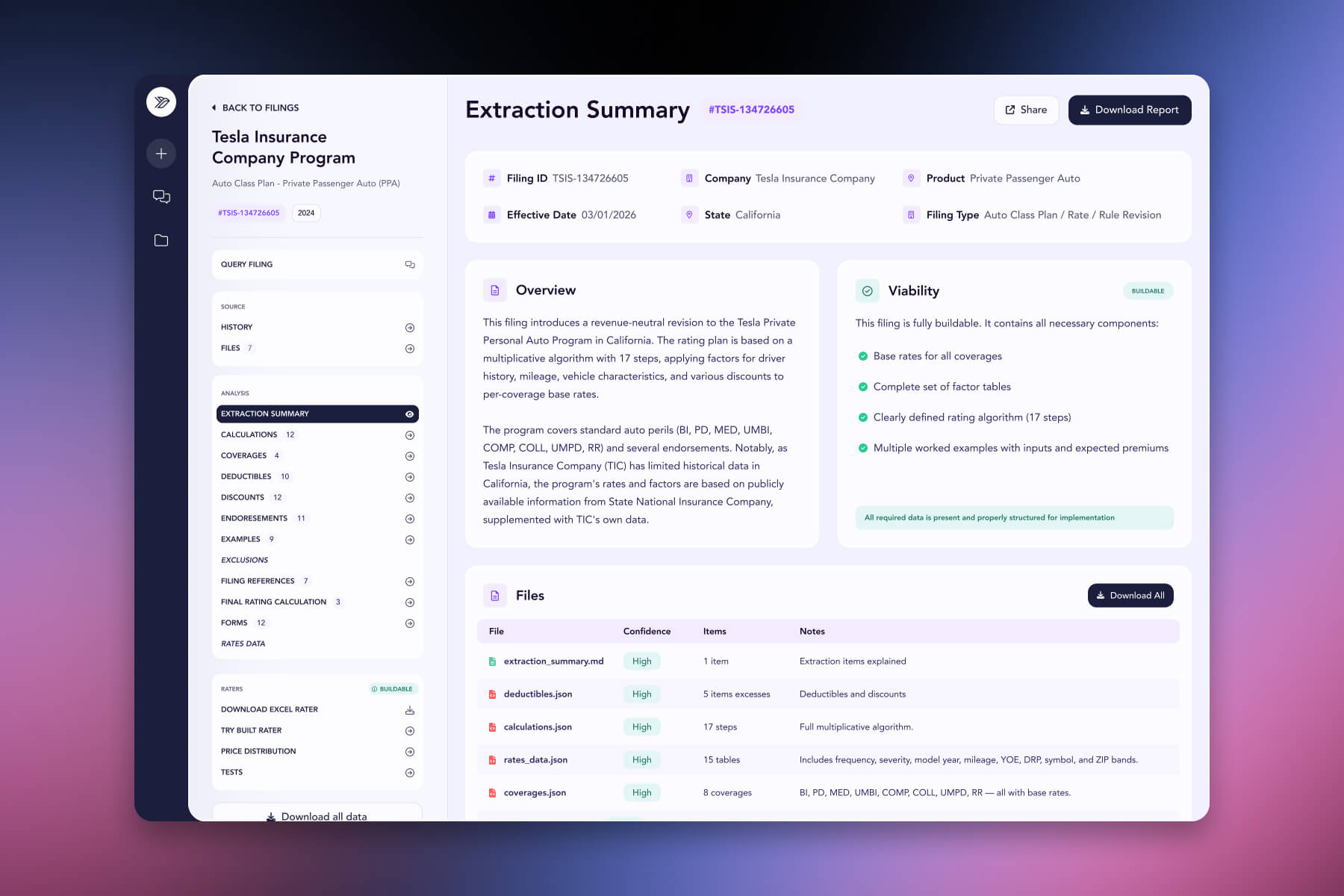

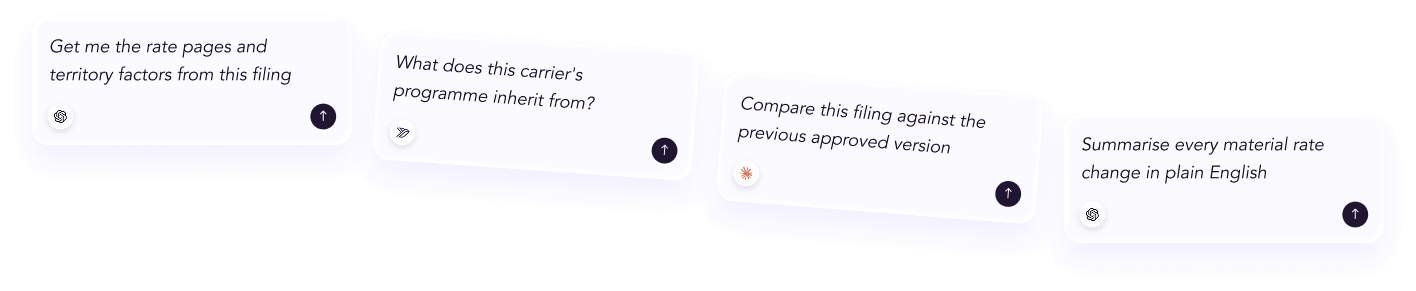
Connected via MCP to the AI you already use, Claude or ChatGPT, or through our dedicated platform, serff.ai makes searching and analysing SERFF filings effortless. Multi-state research becomes a single question: ask how a product varies across states, or which states have the most recent activity, and get a grounded, cited answer in seconds.
The manual way
Search a product state by state and compile results manually.
With serff.ai, just ask
“Show this product's filings across all these states.”
The manual way
Work out where rates differ most for the same product.
With serff.ai, just ask
“Which states have the highest rates for this product?”
The manual way
Check whether forms are consistent across states.
With serff.ai, just ask
“Does this product's policy wording vary by state?”
The manual way
Track a staggered multi-state rollout as it happens.
With serff.ai, just ask
“Which states has this product launched in so far?”
Every answer is cited back to the exact page of the source PDF and grounded only in filed values, with no invented numbers, so you can trust it the way this audience needs to. Research that took weeks takes a prompt.
No credit card required. Simply sign up and connect to Claude or ChatGPT or use Swallow’s SERFF.ai platform.
Start by identifying the product in each state you care about, using product-type research within each state search to confirm you have the right filings. This base layer is unavoidable groundwork before any comparison is possible.
Once you have each state's version, the interesting question is usually not any single state but the pattern across them: which states see the highest rates, whether rule differences cluster by region, and whether the product's wording is genuinely standardised or state law is forcing real divergence.
Track the launch date in each state separately. A product that appears to be missing from a state's filings may simply not have reached that state yet in a staggered rollout, rather than being unavailable there by design.
The biggest risk in multi-state research is assuming consistency that isn't there. A product's core identity can stay stable while its rating factors or underwriting guidelines shift meaningfully underneath it from state to state.
Don't generalise from one or two states to the whole product. Regional variation is common enough that a pattern in three states doesn't guarantee the same pattern in a fourth.
Researching a product across states means building each state's version individually before comparing, then looking for where rates, rules, forms and timing genuinely diverge. Assume variation is possible until you've checked, rather than assuming consistency.
Identify the product within each state's own filings individually, then compare the results, since there is no single unified cross-state search.
Rates, underwriting and rating rules, and sometimes policy wording, can all vary by state, along with the timing of when the product was filed or launched.
It may not have reached that state yet in a staggered multi-state rollout, rather than being genuinely unavailable there.
Not necessarily. State-specific legal requirements can force real divergence in policy wording even for an otherwise standardised product.
More than one or two. Regional variation is common enough that a pattern in a few states doesn't guarantee it holds everywhere.





 ChatGPT
 Claude
.png)
.png)
.png)
.png)