
After an insurer submits a filing, it enters a review process at the state insurance department that can take days or months and often reshapes the filing before it is approved. Understanding that lifecycle explains why a filing looks the way it does and why the approved version can differ from what was first submitted.
The journey from submission to decision leaves a trail: status changes, correspondence, amendments and a final disposition. Reading a filing well means reading that trail, not just the final documents, because it explains how the outcome was reached.
serff.ai is built to do that for you: it indexes millions of SERFF filings and lets you ask questions in plain English instead of opening documents one by one. You can connect it to the AI assistant you already use: Claude or ChatGPT, via the serff.ai MCP server, or work directly in the web platform.
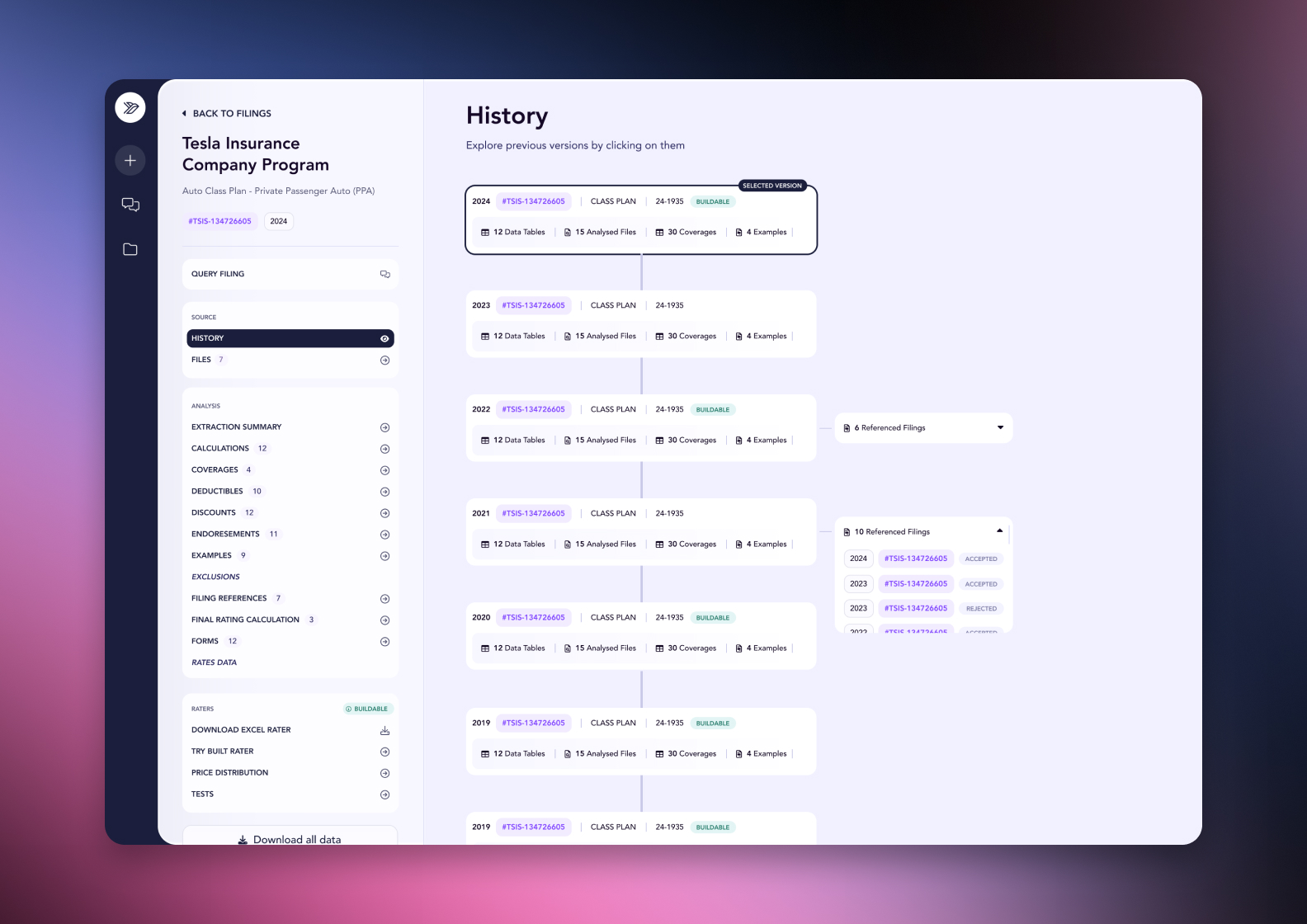

Connected via MCP to the AI you already use, Claude or ChatGPT, or through our dedicated platform, serff.ai makes searching and analysing SERFF filings effortless. The filing lifecycle becomes a single question: ask where a filing is in review, what has changed since submission, or how it was resolved, and get a grounded, cited answer in seconds.
The manual way
Piece together a filing's history from scattered dates.
With serff.ai, just ask
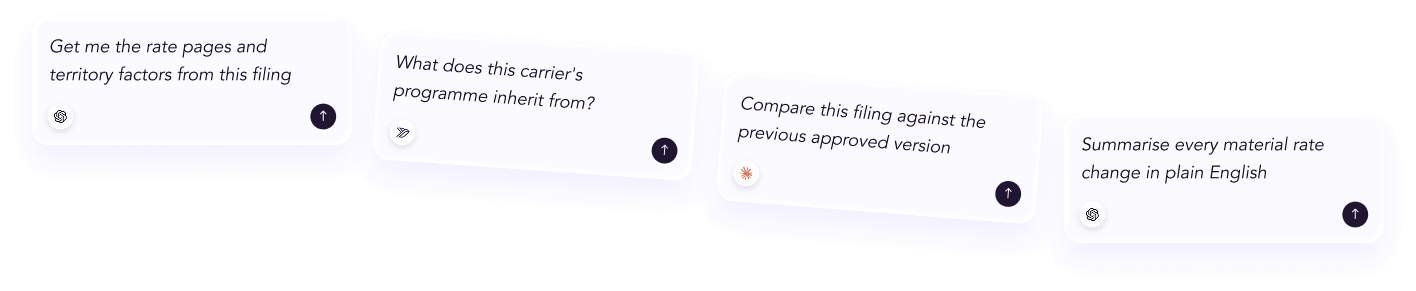
“What has happened to this filing since submission?”
The manual way
Check the current status of a pending filing.
With serff.ai, just ask
“What is the current status of this filing?”
The manual way
Read the whole thread to find what was amended.
With serff.ai, just ask
“What was amended after submission?”
The manual way
Work out how long review took across many filings.
With serff.ai, just ask
“How long did this filing take to be decided?”
Every answer is cited back to the exact page of the source PDF and grounded only in filed values, with no invented numbers, so you can trust it the way this audience needs to. Research that took weeks takes a prompt.
No credit card required. Simply sign up and connect to Claude or ChatGPT or use Swallow’s SERFF.ai platform.
Most filings move through a recognisable sequence between submission and decision, even though the timing and formality vary by state and filing type.
Each stage is covered in more depth in its own guide, from objection letters to filing disposition.
How much happens before a change can be used depends on the state's review regime. Under prior approval, the insurer must wait for sign-off. Under file-and-use, it can use the change around the time of filing. Under use-and-file, it can use the change first and file shortly after. The regime shapes both the timeline and how much back-and-forth you will see.
Every stage leaves a record: filing status updates, regulatory correspondence, and amendments. Together they explain why the approved filing differs from the submitted one.
If you read only the final approved documents, you miss the amendment and objection trail that explains how the filing changed. The story of a filing is in its history, not just its outcome.
Track the status, read the correspondence in order, note what each amendment changed, and finish at the disposition to see the result. Comparing the first submission against the final approved version shows exactly what the review process reshaped.
After submission, a filing is reviewed, questioned through objections, revised through responses and amendments, and closed by a disposition. The approved version often differs from the original, and the trail of that journey is where the real story of the filing lives.
It is assigned to a reviewer, assessed, often questioned through objection letters, revised through responses and amendments, and closed with a final disposition.
It varies widely by state, product and complexity, from a few days for a simple file-and-use submission to several months for a complex rate filing.
Under prior approval, the insurer must wait for sign-off before using a change; under file-and-use, it can use the change around the time of filing.
An amendment is a change made to a filing after submission, often in response to regulator objections, replacing or updating documents in the submission.
Filing status and correspondence are often viewable through SERFF Filing Access, though availability and detail vary by state.





 ChatGPT
 Claude
.png)
.png)
.png)
.png)