
An actuarial memorandum is the document in a rate filing that explains the reasoning behind a proposed rate change. Where the rate pages show what the new prices are, the memorandum sets out why: the loss experience, the trend and development assumptions, the credibility of the data, the expense provisions and the methodology used to arrive at the indicated rate.
It is usually the single most informative document in a rate filing, and the one a regulator scrutinises most closely. Reading it well means following an argument built from exhibits and assumptions, and checking each step by hand.
serff.ai is built to do that for you: it indexes millions of SERFF filings and lets you ask questions in plain English instead of opening documents one by one. You can connect it to the AI assistant you already use: Claude or ChatGPT, via the serff.ai MCP server, or work directly in the web platform.
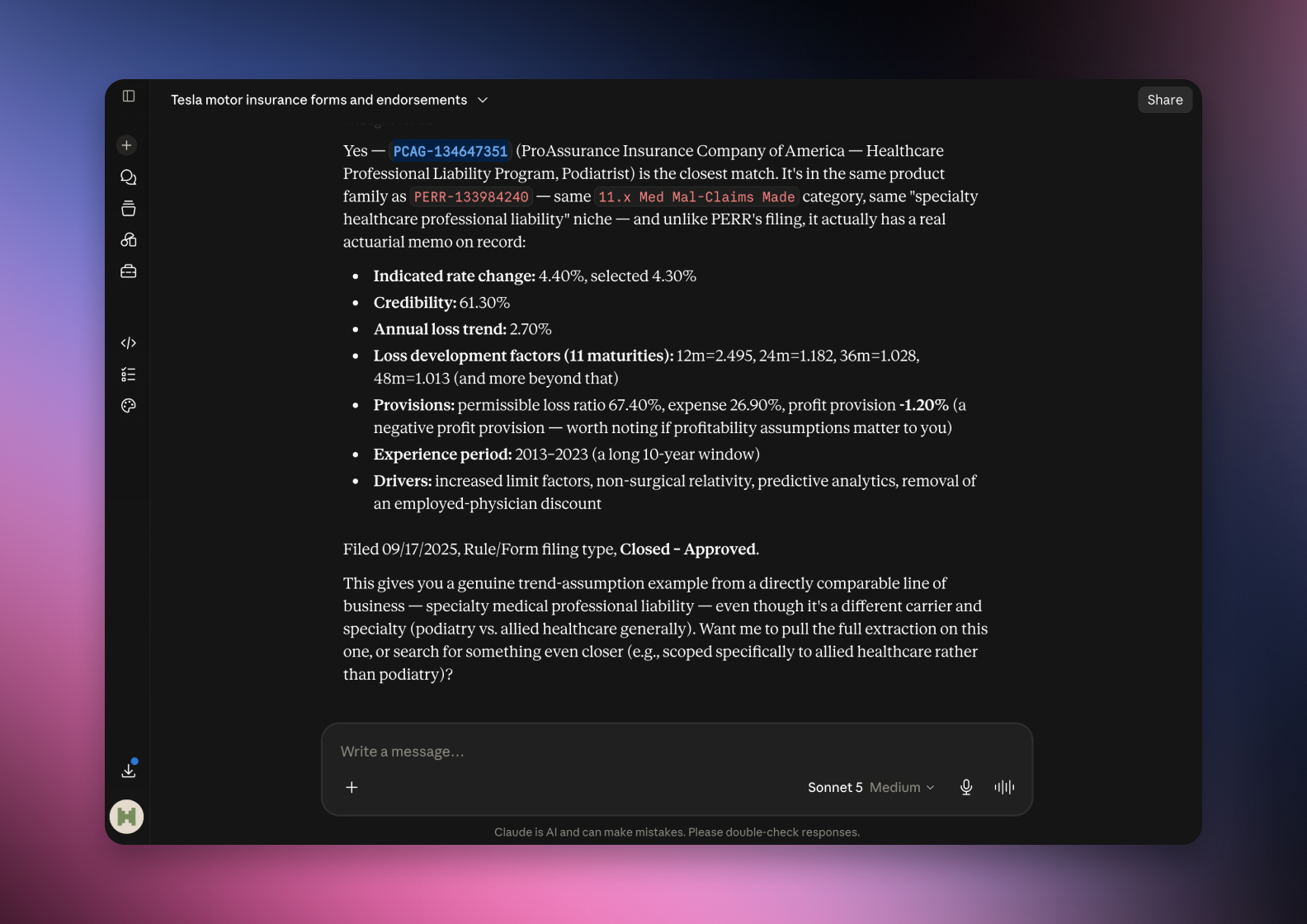

Connected via MCP to the AI you already use, Claude or ChatGPT, or through our dedicated platform, serff.ai makes searching and analysing SERFF filings effortless. An actuarial memorandum becomes a single question: ask what trend was selected, how the indication was built, or where a number comes from, and get a grounded, cited answer in seconds.
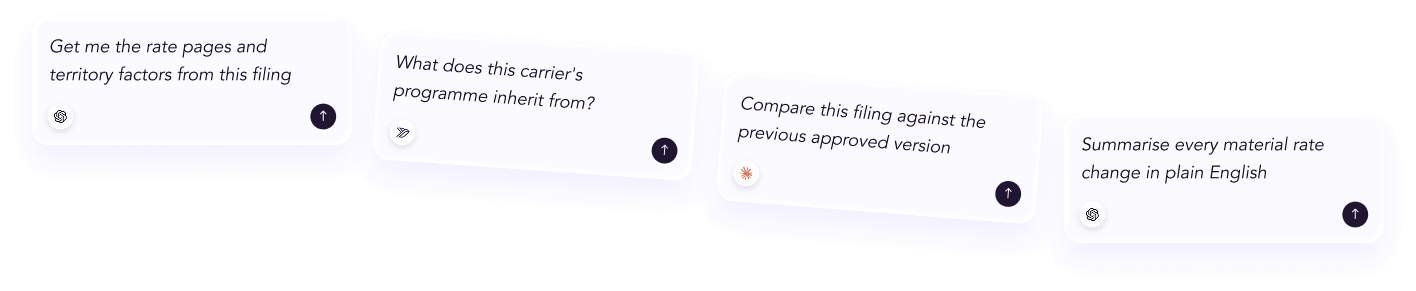
The manual way
Read the full memorandum to find the trend selection.
With serff.ai, just ask
“What trend assumptions does this memorandum use?”
The manual way
Trace the indicated rate back through the exhibits.
With serff.ai, just ask
“How was the indicated rate change calculated?”
The manual way
Check the credibility and expense assumptions by hand.
With serff.ai, just ask
“What credibility and expense provisions are assumed?”
The manual way
Compare this memorandum's approach to an earlier filing.
With serff.ai, just ask
“How does the methodology compare to the previous filing?”
Every answer is cited back to the exact page of the source PDF and grounded only in filed values, with no invented numbers, so you can trust it the way this audience needs to. Research that took weeks takes a prompt.
No credit card required. Simply sign up and connect to Claude or ChatGPT or use Swallow’s SERFF.ai platform.
The memorandum walks from raw experience to a final rate indication. The building blocks are consistent even when the product is not.
The memorandum is where a rate change is won or lost. It is the justification a regulator tests, and it is the section objection letters most often target, questioning a trend selection or a credibility assumption. For anyone reading a competitor's filing, it is also the clearest explanation of the thinking behind their pricing.
Read it for the argument, not just the numbers: what experience period was used, what trend was selected, how credible the data is, and how the indication was built from there. Then treat the exhibits as the workings that support each step.
Some supporting exhibits can be filed as confidential and withheld. If the memorandum refers to an exhibit you cannot see, the reasoning may still be sound; the workings are simply not public.
The two are easy to confuse. The memorandum is the written argument for the change; the actuarial exhibit is the set of supporting calculations and data tables the argument rests on. You read the memorandum to understand the case, and the exhibits to check it.
The actuarial memorandum is the reasoning behind a rate change: loss experience, trend, credibility, expenses and method, ending in an indicated rate. It is the document regulators scrutinise most, and the best explanation of an insurer's pricing you will find in a filing.
It is the document in a rate filing that explains and justifies a rate change, covering the loss experience, trend, credibility, expenses and the methodology behind the indicated rate.
It is prepared by or under the direction of a qualified actuary, and is often accompanied by an actuarial certification.
Often yes, through SERFF Filing Access, though some supporting exhibits can be filed as confidential and withheld from public view.
The memorandum is the written argument for the rate change; the exhibits are the supporting calculations and data the argument rests on.
It is the rate change the memorandum's analysis supports. The insurer may then request a different figure, and the regulator may approve a different one again.





 ChatGPT
 Claude
.png)
.png)
.png)
.png)